How to use more of your own solar power
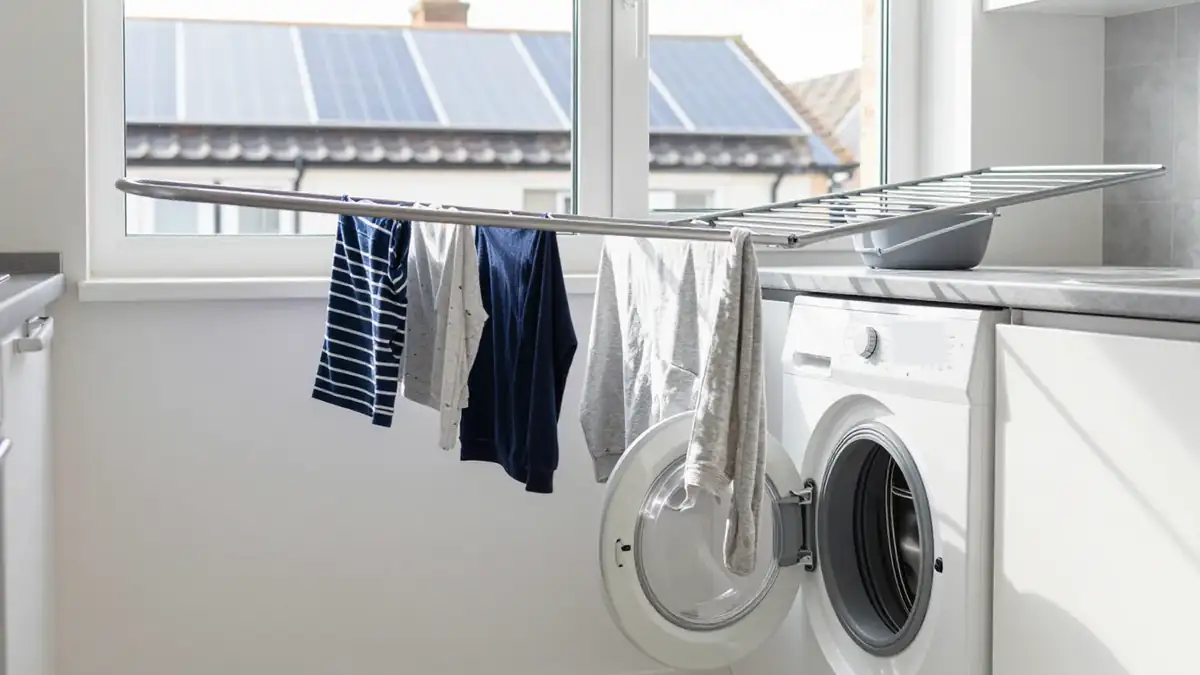
The best way to use more of your solar power is to run your big appliances when the sun is out. Set timers for washing, drying and dishwashing to run at midday. You can then add a battery, a hot water diverter or an electric car to soak up more.
Why bother? Because a unit you use is worth far more than a unit you sell. This guide shows what the gap is, which steps cost nothing, and which ones need money.
Why using solar power yourself beats selling it
Energy Saving Trust says you typically get around 12p for each unit you export through the Smart Export Guarantee. It adds that you would normally buy electricity for more than twice that price. So it can make more sense to use the power yourself than to sell it.
Ofgem’s figures back this up. From 1 October 2026, the price cap averages 26.32p per kWh for electricity on a default tariff paid by Direct Debit. Ofgem says that figure excludes VAT, which the government has removed from electricity bills until 31 March 2027.
Put the two numbers side by side. Using a unit saves roughly 26p, while exporting it earns around 12p. That is a gap of about 14p for every unit you shift. Our guide to the Smart Export Guarantee covers export rates in full.
These are averages, so your own tariff may differ. Even so, the pattern holds for most homes, because buying is dearer than selling on almost every standard tariff.
How much solar power you already use
Many homes use less than they expect. Energy Saving Trust describes one household with a 4.2kW system. In its first year, the family used about 3,300 kWh, and the panels made about 3,100 kWh. Even so, only 40 percent of the solar power was used at home or in the car. The rest went to the grid.
That is one example, not an average. Your figure depends on your system, your roof and your day. Energy Saving Trust says that if you are away during the day, you are less likely to use the power unless you set timers for your appliances.
So find your own number before you spend anything. Your app or meter may show how much you generate, use and export. Our guide to reading your solar monitoring app shows what to look for.
Free ways to use more solar power
Start with habits, because they cost nothing. The same case study says the family found it easy to adjust their habits. Here is a short list to try.
- Run the washing machine, dishwasher and tumble dryer at midday, using delay timers.
- Cook and boil water in the sunniest part of the day, if you are home.
- Charge laptops, tools and phones during the day.
- Move heavy use from the evening to the afternoon where you can.
Smart plugs and appliance timers help if you are out. Your washing machine can start itself at noon while you are at work. However, check the manual before you run any appliance when no one is home, because some makers advise against it.
Weather changes the plan. On dull days you will make less, so loads that need lots of power may still need grid electricity. That is fine, because the aim is to use the sun when it shines, not to avoid the grid entirely. Our post on solar panels in winter explains what to expect in colder months.
A simple plan for the first month
Start by watching, not changing. For one week, note when your panels peak and when your home uses power. Then pick the two biggest loads you can move.
Next, move them for a week and compare. Your app should show whether the export line shrank. If it did, keep going, since each unit you shift saves about 14p at the figures above.
Finally, decide whether a paid upgrade makes sense. Many homes find that free changes cover most of the gain, so spend only if a clear gap remains.
Ways that cost money
If free steps are not enough, three upgrades can soak up more of your power. Each has a different cost and payoff, so ask for a written estimate before you buy. A good installer will use your own meter data, not a general average. Our guide to choosing a solar installer lists what to ask.
A battery stores spare power for the evening. Energy Saving Trust gives a range of £1,500 to £10,000 for battery storage, with a 5kWh system around £4,600. It will not always repay its cost on savings alone. Our guide to solar battery cost and sizing helps you decide.
A diverter sends spare solar power to your hot water cylinder instead of the grid. This turns spare power into stored heat. Our post on solar diverters for hot water explains how that works.
An electric car is another large user. Energy Saving Trust says you can charge a car or van in the day while your panels are making power. Read our guide to charging an electric car from solar panels for the details. A heat pump is a third big user, and Energy Saving Trust says solar can lower both your electricity and heating bills when you run one. See solar panels and heat pumps.
Use a tariff that fits your habits
A time-of-use tariff can help when you have a battery. You charge the battery when power is cheap and use it when power is dear. Our guide to time-of-use tariffs with solar and a battery goes through the main types.
You still want an export tariff for the power you cannot use. Compare rates every year. Energy Saving Trust notes that the best export rates often need you to buy your import power from the same supplier.
For a wider view on value, see whether solar panels are worth it. Our hub on solar panel costs and savings puts these figures in context.
Keep the system healthy
Using more power only helps if your system keeps working, since a fault quietly costs you money. Energy Saving Trust says some inverters have online monitoring and can email you if the system fails. It adds that panels should last 25 years or more, but an inverter needs replacing after around 12 years.
So watch your app for dips. A sudden drop on a sunny day can mean a fault or shading. Our hub on solar panel maintenance and lifespan covers what to check and when to call your installer.
Finally, keep nearby trees trimmed. Energy Saving Trust says shading can hurt output, and trimming is the main upkeep it advises. Our hubs on how solar panels work and batteries and export give the background.
Sources
- Solar panels: costs, savings and benefits explained — Energy Saving Trust (updated 1 October 2026)
- Battery storage — Energy Saving Trust (updated 6 October 2026)
- Powered by sunshine: why electric vehicles and solar panels are a perfect match — Energy Saving Trust
- Which energy tariffs are best for renewable technology combinations? — Energy Saving Trust (updated 12 August 2026)
- Changes to energy price cap between 1 October and 31 December 2026 — Ofgem
Common questions
Why is using my own solar power better than exporting it?
A unit you use saves you the price of buying one. A unit you export earns a lower rate. Energy Saving Trust says export typically pays around 12p, while you would normally pay more than twice that to buy a unit.
How much of my solar power will I use without changing anything?
It varies a lot. One Energy Saving Trust case study household found that only 40 percent of its solar power was used at home in the first year. Homes with someone in during the day tend to use more.
Do I need a battery to use more solar power?
No. Free changes come first, such as timers and daytime appliance use. A battery or a diverter can help later, but check the cost against the saving before you buy.
Should I still get an export tariff?
Yes. Whatever you cannot use or store is exported, and an export tariff pays you for it. Compare rates each year, because suppliers change them.
Will using more solar power lower my export payments?
Yes, because you export less. However, you also buy fewer units from the grid, and each of those units costs more than an export unit pays. The saving is usually larger than the lost income.