Solar panels and heat pumps together
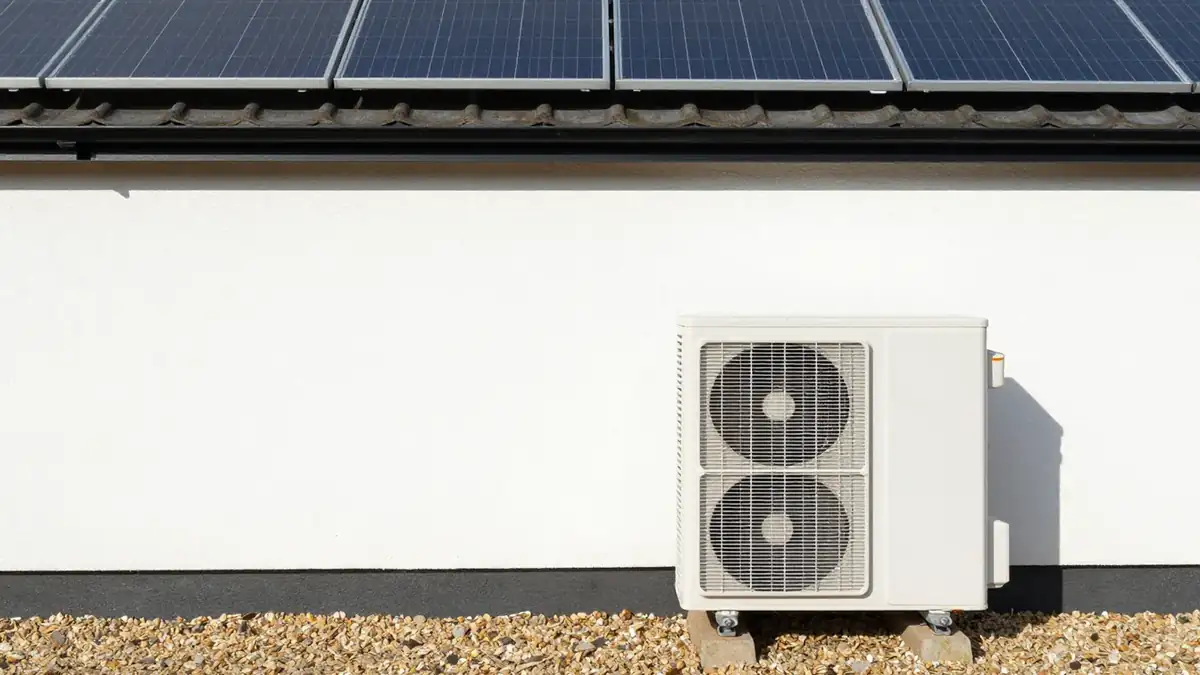
Solar panels and a heat pump work well together, but they do not cancel the bill. Panels make the most power in summer, while a heat pump uses the most in winter. So solar covers part of your running cost, and the grid covers the rest.
The tariff you pick matters as much as the kit. This guide explains how the two fit, what grants apply and what independent research says about savings. It sits within our hub on solar panel costs and savings.
How panels and a heat pump fit together
A heat pump takes heat from the outside air and moves it into your home. Energy Saving Trust says heat pumps are more than three times as efficient as a gas or oil boiler. They run on electricity, which is what your panels make.
That makes the pairing sound ideal. However, timing is the catch. Energy Saving Trust says panels make less power in winter because days are shorter, cloud is more likely and sunlight is weaker. Heating demand is highest in those same months.
Where solar helps most
Solar helps in spring, summer and autumn. It also helps with hot water all year, because a cylinder stores heat. Energy Saving Trust describes a Somerset home with 18 panels, an air source heat pump and a car charger. The owners say the panels cut their yearly bill by about £750.
That is one household’s own figure. Your result depends on your roof, your use and your tariff. Our guide on how many solar panels you need explains how to size a system once you add a heat pump.
What it costs
Energy Saving Trust says an air source heat pump typically costs around £12,000 to install. Its July 2026 report uses an average of £11,700 without financial support. Costs vary with the size of the pump, your property and whether you need larger radiators.
Solar panels are a separate cost. For comparison, Energy Saving Trust puts a typical 4.5 kWp home system at around £7,600. Get at least three quotes for each job, because prices differ a lot.
Grants
The Boiler Upgrade Scheme gives £7,500 towards an air source heat pump in England and Wales. GOV.UK states the amount, as checked in October 2026. It also says the scheme does not fund hybrid systems, such as a gas boiler with a heat pump. Until March 2027, homes heated by oil or LPG with no mains gas can get an extra £1,500.
Scotland and Northern Ireland differ. Energy Saving Trust says Scottish homes might get an interest-free loan or a grant, while Northern Ireland has no specific heat pump grant at present. Check the official page before you commit, because schemes change. Our hub on solar panel grants and funding tracks what is on offer.
There is no dedicated government grant for solar panels. Energy Saving Trust says funding may come through other schemes. Our post on 0% VAT on solar panels and batteries explains the tax side of the price.
What the research says about savings
Energy Saving Trust modelled more than a million combinations of technology and tariff in its July 2026 report, Flexible Futures. It found that some households could cut yearly bills by around £800. Heating costs fell by up to 80 percent compared with gas alone.
Those are modelled results, so treat them as a guide. They assume the right tariff and the right kit. The report also found that heat pump owners on a smart tariff save around £330 a year compared with those who are not.
Why tariffs matter
On standard tariffs, electricity costs nearly four times as much as gas. As a result, a heat pump can cost slightly more to run than a new gas or oil boiler. Energy Saving Trust says a heat pump time-of-use tariff changes that, and can make a heat pump cheaper to run than a gas boiler.
Choosing a tariff with both
Energy Saving Trust gives clear advice for a home with a heat pump and solar panels. It says to get a good Smart Export Guarantee rate for your export. Then choose either a dynamic tariff or a heat pump tariff for your imports.
There is a catch. You usually need both from the same company to get a good export rate. So look at which suppliers offer export rates alongside the import tariffs you want.
If you choose a heat pump tariff, Energy Saving Trust advises one without a peak rate where possible. The reason is that you often have to run the heat pump through the dear period to stay warm. Our guide to time-of-use tariffs with solar and a battery explains how these work, and our guide to the Smart Export Guarantee covers export rates.
Do you need a battery or a diverter?
A battery stores spare solar power for later. Energy Saving Trust says a battery saves you more money if it runs a heat pump than if it only exports solar power. Even so, batteries are costly, so check the sum for your home. Our hub on batteries and export explains your options.
Meanwhile, a diverter is the cheaper option for hot water. It sends spare solar power to an immersion heater in the cylinder. The Somerset owners above used one and decided against a battery. Our post on solar diverters for hot water explains when this works.
An electric car can also soak up spare power. See our guide to charging an electric car from solar panels if you have one. For more ways to use what you make, read how to use more of your own solar power.
Practical points for your home
Plan both jobs together. For instance, a heat pump needs a hot water cylinder, because it does not give hot water on demand. Energy Saving Trust says a cylinder usually fits in a cupboard of about 80 cm by 80 cm.
Radiators often need upgrading too. That is because heat pumps run at lower temperatures than boilers, so you may need bigger radiators and some new pipework. Insulation helps whatever you choose. The Somerset owners found that new windows meant they could fit a smaller heat pump.
Most heat pump installs count as permitted development and need no planning permission. However, check with your council if your home is listed or in a conservation area. Use certified installers for both jobs, and see our hub on how solar panels work for the basics of the solar side.
Once both are in, track the results. Our guide to reading your solar monitoring app explains how to follow your generation. A heat pump may have its own meter, so you can see how much solar power it uses.
Sources
- Air source heat pumps — Energy Saving Trust
- Flexible futures: integrating smart tariffs with low-carbon home technologies — Energy Saving Trust (updated 10 July 2026)
- Clean tech combo could help households beat rising energy bills — Energy Saving Trust (15 July 2026)
- Which energy tariffs are best for renewable technology combinations? — Energy Saving Trust (updated 12 August 2026)
- Battery storage — Energy Saving Trust (updated 6 October 2026)
- How Russell and Kate installed solar panels and a heat pump — Energy Saving Trust (updated 13 August 2026)
- Solar panels: costs, savings and benefits explained — Energy Saving Trust (updated 1 October 2026)
- Solar power facts — Energy Saving Trust
- Boiler Upgrade Scheme: what you can get — GOV.UK
Common questions
Can solar panels power a heat pump?
Partly. Solar power runs the heat pump when the sun shines, and the grid fills the gap. In winter, panels make less power just when heating demand peaks, so expect to buy most of your heating electricity.
Do I need a battery with a heat pump and solar panels?
Not always. Energy Saving Trust says a battery saves more money if it runs a heat pump than if it only exports solar power. Even so, check the cost against the saving before you buy.
Can I get a grant for a heat pump?
In England and Wales, the Boiler Upgrade Scheme gives £7,500 towards an air source heat pump, as stated on GOV.UK in October 2026. Scotland and Northern Ireland have separate support. There is no dedicated grant for solar panels.
Does the type of tariff matter?
Yes. Energy Saving Trust says a heat pump on a smart tariff can save around £330 a year. For homes with solar, it suggests a good export rate plus a dynamic or heat pump tariff, ideally from one supplier.
Is a solar diverter useful with a heat pump?
It can be. A diverter sends spare solar power to an immersion heater in the hot water cylinder. Ask your installer how it will work alongside the heat pump.