Solar diverters for hot water
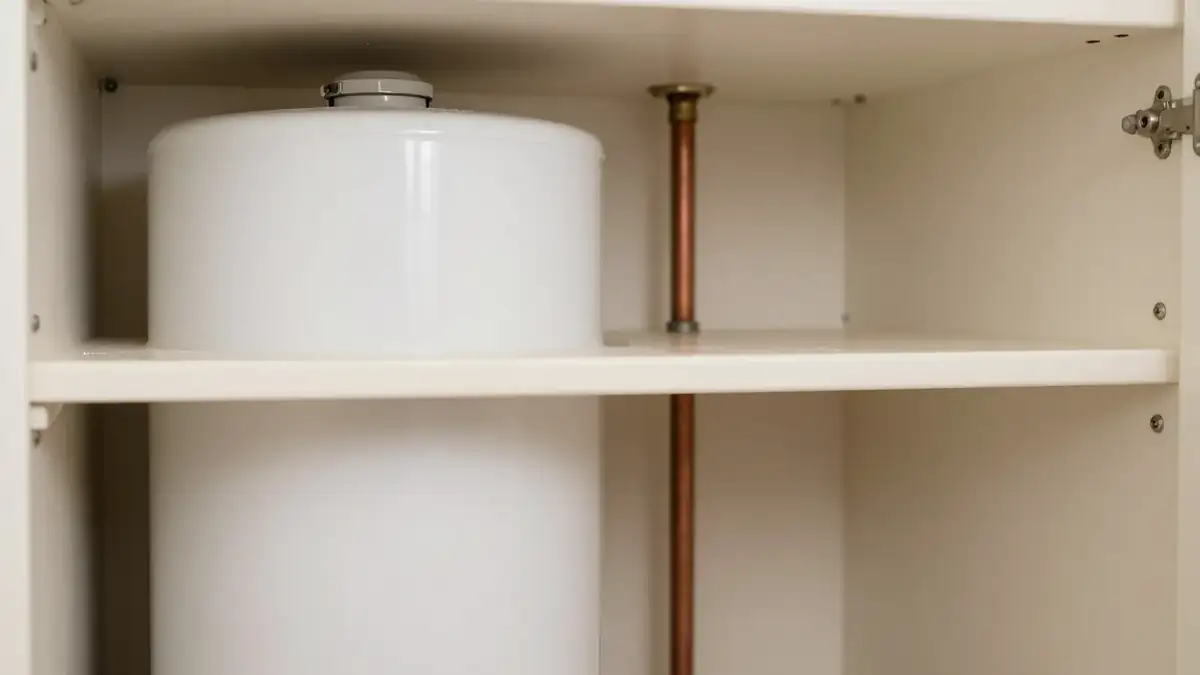
A solar diverter sends spare power from your panels to your hot water cylinder, instead of exporting it to the grid. It turns surplus electricity into stored heat. It only works if you have a hot water cylinder with an immersion heater, so it does not suit most combi boiler homes.
Whether it pays depends on how you heat water now, and on what your export tariff pays. This guide explains how a diverter works, what it costs and when it is worth fitting. It follows on from our hub on batteries and export.
How a solar diverter works
A diverter is a small control box. It watches how much your panels make and how much your home uses. When there is spare power, it sends the spare power to the immersion heater in your cylinder.
Renewable Energy Hub explains that sensors fitted at your meter and consumer unit track the flow. The home always has first call on the power, while the diverter only takes what is left. As a result, the kettle and the oven are never starved.
The myenergi eddi is one well-known unit. Its maker says diverters can also feed a battery, an electric car charger or a storage heater. Hot water is the most common use, because a cylinder stores heat well. Our post on charging an electric car from solar panels covers the car option.
Why heat is a good place to store power
A cylinder already exists in many homes, so storing heat in it needs no new tank. The water you heat at midday is ready for the evening. That turns midday sun into a hot bath at night.
What you need before you buy
A diverter is not for every home, so check these points first.
- Solar panels. The diverter needs surplus power to work with. Our guide to how solar panels work explains where the surplus comes from.
- A hot water cylinder. Renewable Energy Hub says these devices work with cylinder systems and not with combi boilers, which have no tank.
- An immersion heater. Most diverters use the immersion element in the cylinder. Many cylinders have one already, but check.
- Surplus power at the right time. If nobody is home, you export most of it at midday, and the diverter has a lot to catch.
Ask your installer about the cylinder’s size and age. Energy Saving Trust advises that a hot water tank should be as insulated as possible, to minimise heat lost from the stored water. An old, poorly insulated tank wastes part of what you store.
What a solar diverter costs
One 2026 UK price guide from BestBuilders, updated 22 August 2026, puts the fitted cost at £320 to £700. It says most installs land between £450 and £550. It splits that into the unit at £180 to £400, plus an electrician at £120 to £300.
That is one guide, and quotes will vary. Prices depend on the model, on your wiring and on whether the consumer unit needs work. Get at least three quotes and ask what each one includes. Our guide to solar battery cost and sizing shows how this compares with storage.
The work involves your consumer unit, so use a qualified electrician. Ideally, pick one who is MCS-registered for solar. Our hub on choosing a solar installer explains how to check credentials.
Does a diverter save money?
Compare two numbers, because the gap between them decides the result. The first is what each spare unit is worth when exported. The second is what each unit is worth when it heats your water.
Energy Saving Trust says export typically pays around 12p per kWh. Rates vary by supplier, so check yours. If your water is heated by electricity now, the diverter saves you the grid price. Ofgem says the average default electricity rate is 26.32p per kWh from 1 October 2026. In that case, a diverted unit is worth more than twice an exported one.
If you heat water with gas
The sum changes if a gas boiler heats your cylinder. Ofgem says the average default gas rate is 7.97p per kWh. A diverted unit then replaces gas, which is worth about 8p before boiler losses. That is less than a typical export payment.
So a diverter may not pay back for you. Check your own tariff first. Our guide to the Smart Export Guarantee is the place to compare export rates.
What the BestBuilders guide says on payback
The same guide estimates payback at 2 to 5 years, with yearly savings of £90 to £250 on water heating. Treat those as a rough guide, because they depend on your array and hot water use. The myenergi maker claims diverters can cut hot water costs by up to 70 percent in the right conditions. That is a manufacturer claim, so test it against your own bills.
Diverter, battery or both?
A diverter and a battery solve the same problem in different ways. Both use spare solar power at home instead of exporting it. However, they cost very different amounts.
- Diverter. It costs a few hundred pounds. It only helps hot water, and it works best in sunny months.
- Battery. It costs more. It serves the whole house, including evening use.
Some households fit both. Energy Saving Trust describes a Somerset home with 3.65 kW of panels, an air source heat pump and a diverter. The owners decided against a battery because spare power went to hot water or to the car. Their 18 panels make about 4,500 kWh a year, and they use around 3,000 kWh of it. They say it saves about £750 a year.
That is one household’s own figure, not a promise. Even so, it shows how a diverter can sit alongside other kit. Our post on whether solar panels are worth it looks at the wider sums.
Questions to ask before you buy
Take this short list to each installer. It helps you compare quotes like for like.
- Is my cylinder suitable, and does it have an immersion heater?
- Which unit do you propose, and what warranty does it carry?
- How will it work with my inverter, my battery or my heat pump?
- What is the fitted price, including the electrician and any consumer unit work?
- Can I see the diverter’s output in my app?
Then work out your own sum. For example, check how much hot water you use, and how much spare power you export at midday. If your export is small, a diverter has little to catch. In that case, free habit changes may be a better first step.
Using a diverter well
Fitting is only half the job, since a few habits make it work better.
- Set the cylinder thermostat on your installer’s advice, so there is room to absorb heat.
- Ask your installer whether any timer that heats the water from the grid should change, because grid heat can leave no space for solar heat.
- Watch your app for the first few weeks. Our guide to reading your solar monitoring app explains the lines to track.
- Pair it with a cheap overnight tariff if the cylinder is cold on dull days. Our post on time-of-use tariffs with solar and a battery explains how those work.
Heat pumps add another angle, because they also heat the cylinder. A heat pump heats the cylinder too, so ask how the two will share it. Our post on solar panels and heat pumps covers that. Energy Saving Trust notes that the Somerset owners had to solve a link between the diverter and the heat pump meter, which took a few weeks. Ask your installer to plan this at the design stage.
For more ideas that need no new kit, see our guide on how to use more of your own solar power. Our hub on solar panel costs and savings shows how a diverter fits into the wider budget.
Sources
- Solar PV immersion diverters — Renewable Energy Hub
- Solar diverter installation cost 2026 UK — BestBuilders (updated 22 August 2026)
- Diverting generated energy — myenergi
- How Russell and Kate installed solar panels and a heat pump — Energy Saving Trust (updated 13 August 2026)
- Which energy tariffs are best for renewable technology combinations? — Energy Saving Trust (updated 12 August 2026)
- Battery storage — Energy Saving Trust (updated 6 October 2026)
- Changes to energy price cap between 1 October and 31 December 2026 — Ofgem
Common questions
What does a solar diverter do?
It watches for spare solar power that would go to the grid. It sends that power to an immersion heater in your hot water cylinder instead. Your home keeps first call on the power.
Can I fit a solar diverter with a combi boiler?
Not usually. A diverter needs a hot water cylinder with an immersion heater to store the heat. A combi boiler has no tank, so there is nowhere to put it.
How much does a solar diverter cost?
One 2026 UK price guide, updated 22 August 2026, puts the fitted cost at £320 to £700. Get at least three quotes, because prices depend on the model and your wiring.
Is a diverter better than a battery?
It depends on your needs. A diverter costs far less and suits homes with a big hot water use. A battery serves the whole house, including evenings. Some homes use both.
Will a diverter work with a heat pump?
It can, if the cylinder has an immersion heater. Energy Saving Trust describes a home that uses one with an air source heat pump. Ask your installer how the two will work together.